How to Prepare Your Property for a Successful Demolition Project in Des Moines
July 18, 2026
Quick Answer: Preparing a property for demolition means handling everything that has to happen before a machine ever touches the building. That includes a pre-demolition site assessment, clearing out contents and flagging salvage, disconnecting and capping utilities, testing older buildings for asbestos and lead, protecting the structures and areas that stay, and mapping out access, staging, and debris removal. Do this work up front and demolition day runs on schedule. Skip it and you get stop-work delays, safety incidents, and a job that stalls before it starts.
You have a building to bring down, a rebuild schedule already on the calendar, and a crew showing up on day one expecting a site that is ready to work. Whether the demolition itself goes smoothly has almost nothing to do with the first swing of the excavator. It is decided in the weeks before, when the utilities get capped, the hazardous materials get tested, and someone confirms the neighboring structure is protected. Preparation is the part of a demolition project that never shows up in the highlight reel, and it is the part that determines whether you finish on time.
This is a walk through what that preparation actually looks like for a commercial property, in the order it needs to happen. None of it is glamorous. All of it keeps your project moving.
Start With a Pre-Demolition Site Assessment
Every solid demolition plan begins with a close look at the building and the ground around it. Before any scope is finalized, a demolition team should walk the site and evaluate what they are actually dealing with: the structural components, how the building was built, what is load-bearing, and where the hidden risks sit.
What the assessment covers
A proper site evaluation reads the structure and flags potential hazards before they become surprises. Older commercial buildings around Des Moines were often built in phases, with additions tied into original framing in ways that are not obvious from the street. The assessment identifies utility connections, structural weak points, and anything that changes how the building should come down.
Why it drives the whole plan
The findings from that walk set the method, the sequence, and the equipment. A downtown structure sharing a party wall with an occupied business gets a very different plan than a standalone warehouse on the edge of town. Getting this right early is what lets a crew work quickly later, because nobody is stopping to figure out a problem that should have been caught in week one.
Demolition also has a way of exposing what was hidden. Once walls open up, crews frequently find water damage, mold, rotted framing, outdated wiring, or pest damage that nobody knew was there. A good assessment anticipates that possibility so a discovery mid-project becomes a planned adjustment instead of a full stop.
Clear Out the Building and Flag Anything Worth Saving
Before the heavy work starts, the building needs to be emptied and anything you want to keep needs to be marked. This sounds simple. On a commercial job it rarely is.
Remove contents and valuables
Furniture, equipment, inventory, tenant belongings, and anything of value should be out of the building before demolition begins. On a tenant turnover or a redevelopment, that can mean coordinating with a departing business to clear the space on a firm date. Leaving it to the last minute is how schedules slip.
Identify salvage and deconstruction targets
Plenty of what is inside a commercial building has value if it comes out intact. Fixtures, architectural elements, steel, copper, and certain mechanical units can be reclaimed rather than crushed. If salvage matters to you, whether for reuse, resale, or diverting material from the landfill, flag those items before demolition so they can be removed carefully instead of hauled off in pieces.
Confirm access
Crews and equipment need a clear path in and out. Gates, doors, and interior routes should be open and usable on day one, with nothing parked or stored in the way. A machine that cannot reach the work is a machine sitting idle on your clock.
Disconnecting Utilities Is Not Optional
Live utilities are the single most dangerous thing on an unprepared demolition site. Gas, electric, water, sewer, and any steam or data lines all have to be located, disconnected, and capped before demolition starts. This is non-negotiable, and it takes lead time.
Locate every line first
You cannot disconnect what you have not found. Utility lines run through walls, under slabs, and across the property in ways that old drawings do not always show. Locating them accurately is the foundation of a safe teardown, because an excavator that clips a live gas line or an energized conductor turns a routine job into an emergency.
Coordinate the shutoffs with the providers
Disconnecting utilities is not a same-day request. The
demolition contractor coordinates with the utility companies to shut off service, pull meters, and cap lines properly, and that scheduling has to be arranged in advance. Water and sewer usually need capping or plugging at the property line so nothing backs up or floods the site once the structure is gone.
TIP: Start the utility disconnection process as early as you can, ideally as soon as the demolition scope is set. Utility providers work on their own timelines, and a delayed gas shutoff is one of the most common reasons a demolition start date slides. Getting the request in early keeps that dependency off your critical path.
Protect the Structures and Areas That Stay
Demolition is rarely a clean-slate teardown. More often, something adjacent has to survive: a neighboring building, an occupied portion of the same structure, a parking area, or utilities feeding a property next door.
Shield adjacent buildings
When you are taking down a structure near others, the crew has to plan for what stays standing. That means protecting shared walls, controlling where debris falls, and dismantling in a controlled sequence rather than simply knocking things over. In a tight urban lot, this planning is the difference between a clean job and damage to a neighbor's property.
Contain dust and debris
Demolition throws a lot of dust, and some of it carries particles from drywall, insulation, and older materials. Containment barriers and water suppression keep that dust from drifting onto neighboring properties, occupied spaces, or the street. On a phased job where part of the building stays in use, dust control is what keeps the occupied side livable.
WARNING: Never let anyone treat a partially demolished structure as stable. Removing walls, supports, or sections changes how loads travel through what remains, and a building mid-demolition can shift or collapse without warning. Keep unauthorized people off the site entirely and leave structural judgment calls to the demolition crew who planned the sequence.
Plan Site Access, Staging, and Debris Removal
A demolition site generates an enormous volume of material fast, and it has nowhere to go unless you planned for it. Debris handling is a logistics problem, and solving it before day one keeps the whole job flowing.
Place your dumpsters and staging right
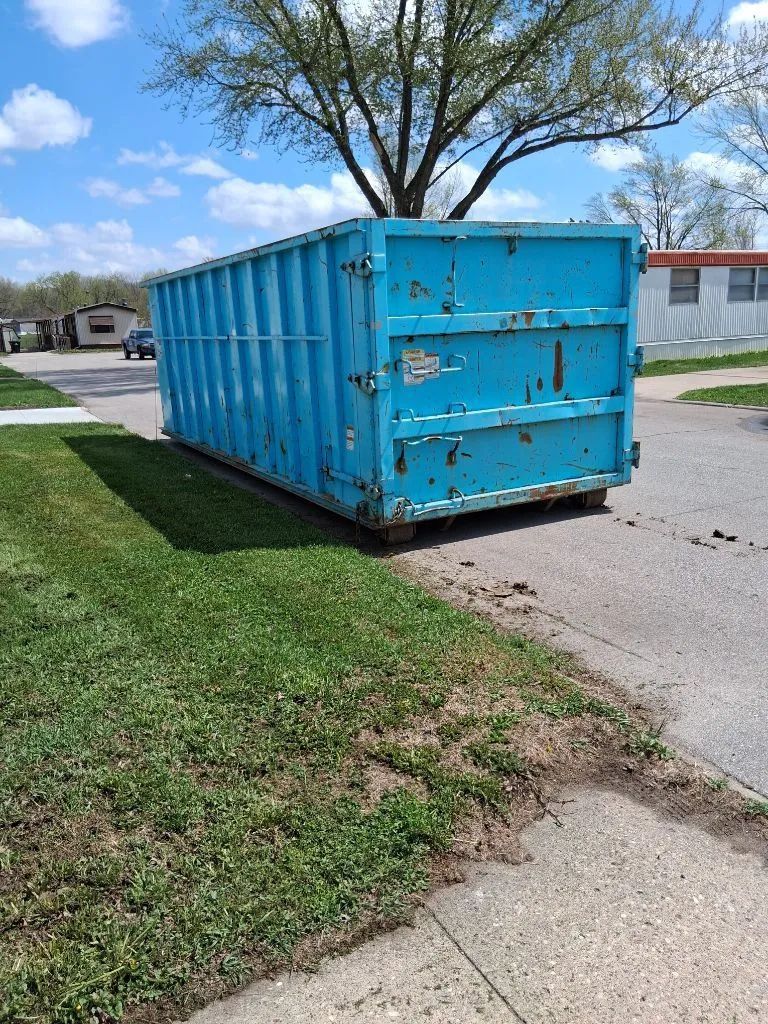
Roll-off dumpsters need to sit where the crew can load them quickly and where trucks can swap them out without blocking the work or the street. On a cramped site, dumpster placement is worth thinking through carefully, because a container in the wrong spot slows every trip the crew makes.
Plan for sorting and recycling
Concrete, steel, wood, and other materials can often be separated and recycled rather than landfilled. Sorting on site takes space and a plan, so decide up front how debris gets separated and where each stream goes. Iowa winters add a wrinkle here too, since frozen ground and snow can complicate hauling and staging, and a plan that accounts for weather holds up better than one that assumes clear skies.
Keep the schedule fed
The goal is a site where material leaves as fast as it is generated. When debris removal keeps pace with demolition, the crew never stops working to deal with a pile, and that steady rhythm is what brings a job in on time.
Frequently Asked Questions
How far in advance should I start preparing for a demolition?
Begin as soon as the demolition scope is set, which for a commercial project often means several weeks out. The long-lead items are utility disconnections and hazardous material testing, and both depend on outside parties working on their own schedules. Starting early keeps those dependencies from pushing your start date.
What has to happen before demolition can begin?
The physical must-dos are a site assessment, utility disconnection and capping, hazardous material testing on older buildings, and clearing the structure of contents. Access has to be open so crews and equipment can reach the work. A demolition contractor walks you through the full sequence so nothing gets missed before the first day.
Do I need to test my building for asbestos before demolition?
Any commercial building from before the 1980s should be surveyed for asbestos and lead-based paint. These materials show up in flooring, insulation, ceiling tile, and pipe wrap, and they need to be removed safely before general demolition. Testing early keeps a mid-project discovery from stopping the whole job.
Can I leave utilities connected if the building is coming down anyway?
No. Live gas, electric, water, and sewer lines are the most serious hazard on a demolition site, and all of them have to be disconnected and capped first. Cutting into an energized or pressurized line during demolition can cause fire, flooding, or injury, which is why this step is never skipped.
What happens to all the debris from a commercial demolition?
It gets sorted and hauled off, with as much as possible diverted to recycling. Concrete, metal, and wood can frequently be reclaimed rather than sent to a landfill. A demolition team plans the debris streams and dumpster logistics ahead of time so material leaves the site as fast as the crew generates it.
How do I keep a demolition from disrupting nearby tenants or businesses?
Plan for containment and communication. Dust barriers, water suppression, and a controlled dismantling sequence limit the impact on occupied areas and neighboring properties, and telling affected tenants what to expect and when prevents most complaints. On a phased job, protecting the occupied side is built into the demolition plan from the start.
Preparation Is Where a Demolition Is Won or Lost
The teardown itself is the visible part, but the outcome is set long before the machines arrive. A property that has been walked, cleared, disconnected, tested, and staged gives a crew everything it needs to work fast and safely. A property that has not becomes a series of stops and surprises that eat your schedule. The work you put in before day one is the work that pays you back on every day after it.
Get your demolition prepared right so the teardown runs safely and on schedule — the difference between a smooth commercial demolition and a stalled one is everything that happens before day one. Blue Sky Cleaning and Demolition Services
handles the full scope, from the pre-demolition site assessment and utility coordination through the teardown, debris hauling with on-site roll-off dumpsters, and post-demolition cleanup that leaves the site ready for what comes next. With more than 20
years of commercial demolition experience and a track record on schools, banks, clinics, and apartment projects across Des Moines, Iowa, we bring the planning that keeps your project moving. Reach out to Blue Sky Cleaning and Demolition Services
to scope your job and line up a demolition that starts ready.