Common Challenges in Demolition and How Blue Sky Cleaning and Demolition Services Overcomes Them
September 30, 2026
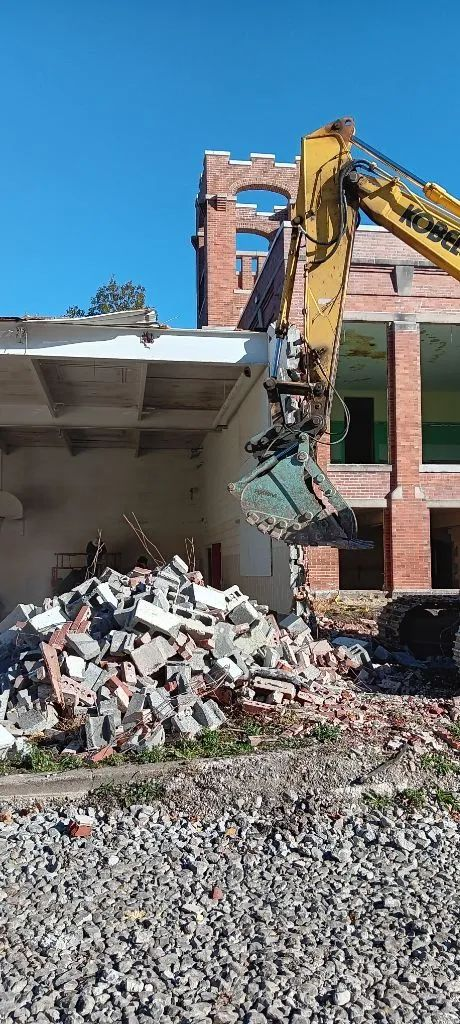
Quick Answer: Commercial demolition runs into the same handful of problems again and again: undocumented utilities, suspect hazardous materials in older buildings, structures and tenants that must stay protected, heavy debris volume, weather, and a rebuild schedule that leaves no slack. Each one is manageable when it is found early. That means a site assessment, utility verification, a hazardous materials survey before work begins, phased work zones with dust control, sorted debris with dumpsters on a planned schedule, and a demolition sequence built backward from what the next trade needs.
Why Demolition Rarely Goes the Way the Drawings Say
The excavator is staged, the dumpsters are scheduled, and the framing crew is booked for the Monday after the last wall comes down. Then a saw blade opens a ceiling and finds a chase nobody drew, or a floor tile gets lifted and the adhesive underneath looks suspiciously old. Every demolition project has a moment like this. The difference between a job that absorbs it and a job that stalls is whether the plan expected it.
If you manage projects as a general contractor, developer, or facility manager, you already know that demolition sits at the front of the schedule. Everything after it depends on it. A delay here does not stay here. It pushes framing, rough in, inspections, and tenant move in dates down the line. This article walks through the challenges that show up most often on commercial demolition work, and how Blue Sky Cleaning and Demolition Services
approaches each one, using methods described on the company's service pages and standard practice across the industry.
Challenge One: Utilities Nobody Mapped
Commercial buildings in central Iowa tend to be built in phases. A warehouse gets an office addition, a retail strip gains a bay, a clinic expands into the suite next door. Each change leaves behind new electrical runs, gas lines, water mains, and drain tie ins, and the original drawings rarely capture all of it. Demolition crews work in the gap between what the plans show and what is actually in the walls.
What Goes Wrong
A cut through a live conduit, a ruptured water line, or a nicked gas pipe does more than cause a delay. It puts people at risk and can shut a site down while the utility responds. Industry damage prevention groups have reported that professional contractors, not homeowners, account for a large share of underground utility damage. The Common Ground Alliance has published analysis pointing to more than half of reported damages involving professional excavators, which is a reminder that experienced crews still get caught by lines they did not expect.
How Blue Sky Handles It
The company's process starts with a site evaluation and structural assessment, followed by securing and coordinating utility disconnections before demolition begins. In practice that means confirming with the owner and the utility providers which services are live, which are capped, and which stay active for the parts of the building that remain. Gas, electrical, water, and sewer each get verified individually rather than assumed. When the scope is an underground one, such as a slab or footing removal, locate requests go out before any machine breaks ground.
What You Can Do
Hand over every as built drawing, past renovation record, and utility shutoff location you can find. Even an incomplete set helps, because it tells the crew where to look first.
Challenge Two: Hazardous Materials in Older Buildings
The second surprise is the one that can stop a project for weeks. Buildings constructed before the 1980s commonly contain asbestos in places that do not look dangerous, including floor tile and mastic, pipe insulation, joint compound, roofing materials, and some ceiling products. Lead paint is common in the same era. None of it is a problem while it stays intact. All of it becomes a problem when a demolition crew turns it into dust.
Why Assessment Comes First
The EPA has long pointed out that disturbing asbestos containing material during demolition and renovation is a recognized source of fiber release, which is why an inspection of the affected areas before work begins is standard practice. A survey by a qualified inspector identifies what is present, where it sits, and what has to be handled separately. Blue Sky lists asbestos assessment among the pre demolition steps on its demolition services page, and it treats the assessment as part of planning rather than an afterthought.
How It Changes The Sequence
When a survey turns up suspect material, the work order changes. Abatement comes first, performed by the appropriate specialists, and general demolition follows once the affected areas are cleared. A good demolition contractor builds that sequence into the schedule early so that the project does not discover it in week three.
TIP: Order the hazardous materials survey as soon as you have site access, not after the demolition bid is awarded. The results feed the scope, the sequence, and the schedule, and they save the most time when they arrive first.
Challenge Three: Protecting What Stays
Not every demolition is a full teardown. Many commercial projects remove one wing, one floor, or one tenant space while the rest of the building keeps operating or keeps standing. A strip of retail units may have a shared wall. A bank branch may be renovating while the drive through stays open. A school may be demolishing an old gymnasium next to a wing full of classrooms.
Adjacent Structures
On exterior work near other buildings, the challenge is controlling vibration, falling debris, and dust so that the neighboring structure is not affected. Blue Sky's exterior demolition page describes working near adjacent buildings with attention to protecting what stays. That generally means a controlled sequence, often working from the top down in sections, rather than pulling a building over in large pieces, along with barriers, netting, and dust suppression at the boundary.
Kept Systems Inside The Building
On selective demolition, the crew is removing what you no longer want while preserving what you do, such as a structural frame, a mechanical system, or finished spaces. The method is slower than a full teardown and relies on precise cutting, hand work near the boundary, and clear marking of what is staying before anyone starts. A few hours spent marking and walking the boundary with the superintendent saves days of repair.
Concrete Work Beside Live Space
Concrete wall sawing is a good example of a method chosen for control. Sawing cuts a clean opening with less vibration and less overbreak than breaking a wall with hydraulic hammers, which matters when the wall next to it holds equipment, records, or people. The company lists wall sawing and removal as its own service for exactly that reason.
Challenge Four: Occupied Buildings, Dust, and Noise
Interior demolition in a building that stays open is one of the hardest jobs to run well. Tenants notice noise before they notice anything else. Dust moves through ductwork, under doors, and into spaces that were never part of the work.
Containment
The working approach combines physical barriers, negative air where the scope calls for it, sealed returns, and protected paths for debris removal. Blue Sky's commercial interior demolition page describes dust control and protecting occupied areas through phased work. Phasing means the demolition moves through the building in zones, each one sealed, cleared, and handed off before the next one starts, so that the occupied side of the building has a clear boundary at all times.
Timing
Noisy work is often scheduled for early mornings, evenings, or weekends when the building is quiet. For a clinic, a bank, or a school, that can be the deciding factor in whether the project is workable at all. The company's posted hours run Monday through Saturday, with Saturday work by appointment, which gives room to plan around a tenant's calendar.
WARNING: Never let demolition debris travel through an occupied corridor on an open cart. Dust and small fragments travel with it, and one trip can undo a day of containment work. Use a dedicated route, a covered chute, or a sealed container instead.
Challenge Five: Debris Volume and Where It Goes
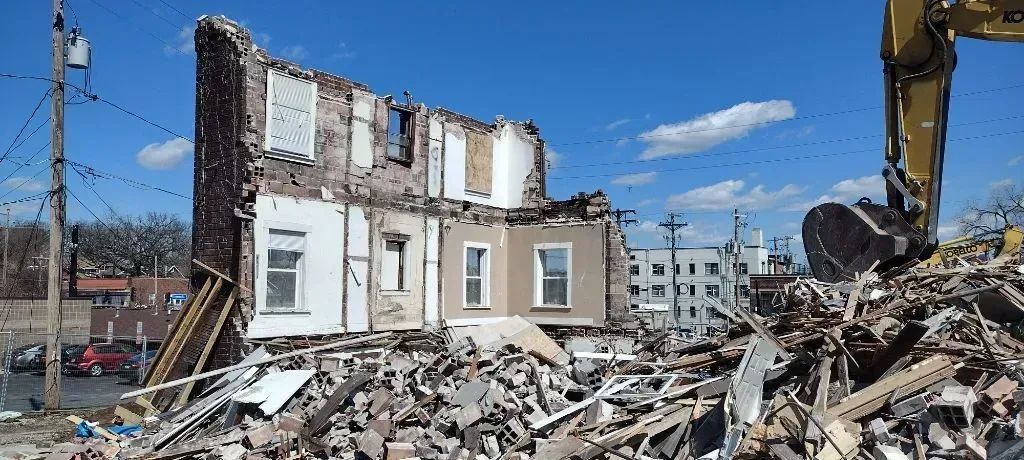
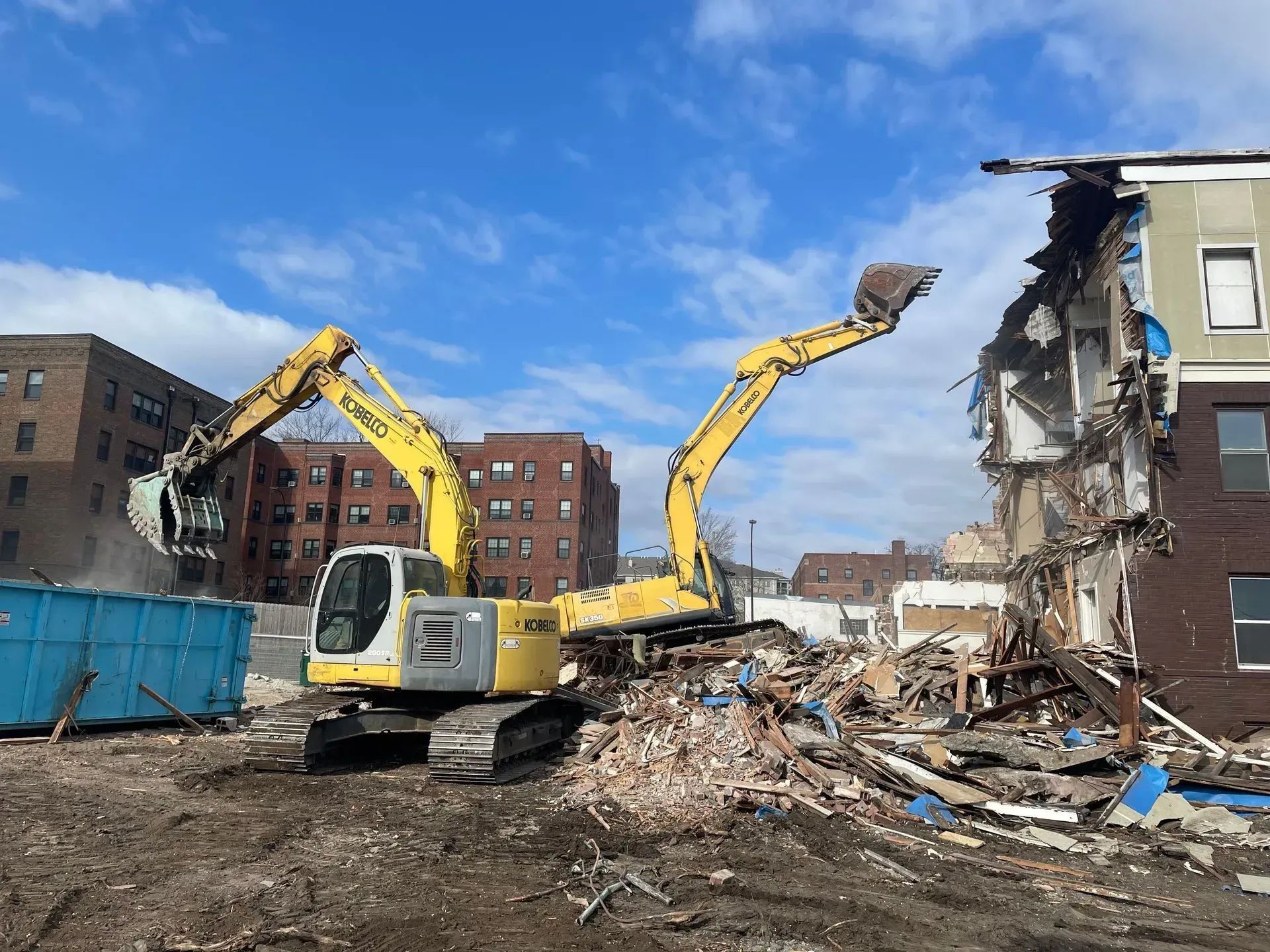
A gutted tenant space, a removed slab, or a torn down building produces a lot of material, and it all has to leave the site on a schedule that matches the work. If dumpsters fill faster than they swap, the crew slows down. If debris is mixed, the loads become harder to recycle and harder to handle.
The Scale Of The Issue
The EPA has estimated that roughly 600 million tons of construction and demolition debris were generated in the United States in 2018, which shows how much material moves through this industry every year. Concrete, asphalt, metal, and wood make up much of it, and many of those streams have established recycling outlets.
Sorting At The Source
Blue Sky describes sorting materials for disposal, recycling, or salvage as part of its demolition process. Separating metal, clean concrete, wood, and general waste as the work proceeds keeps loads cleaner and gives recyclable streams a better chance of going where they should. Clean metal and concrete often have an outlet, while a mixed load usually does not.
Dumpster Logistics
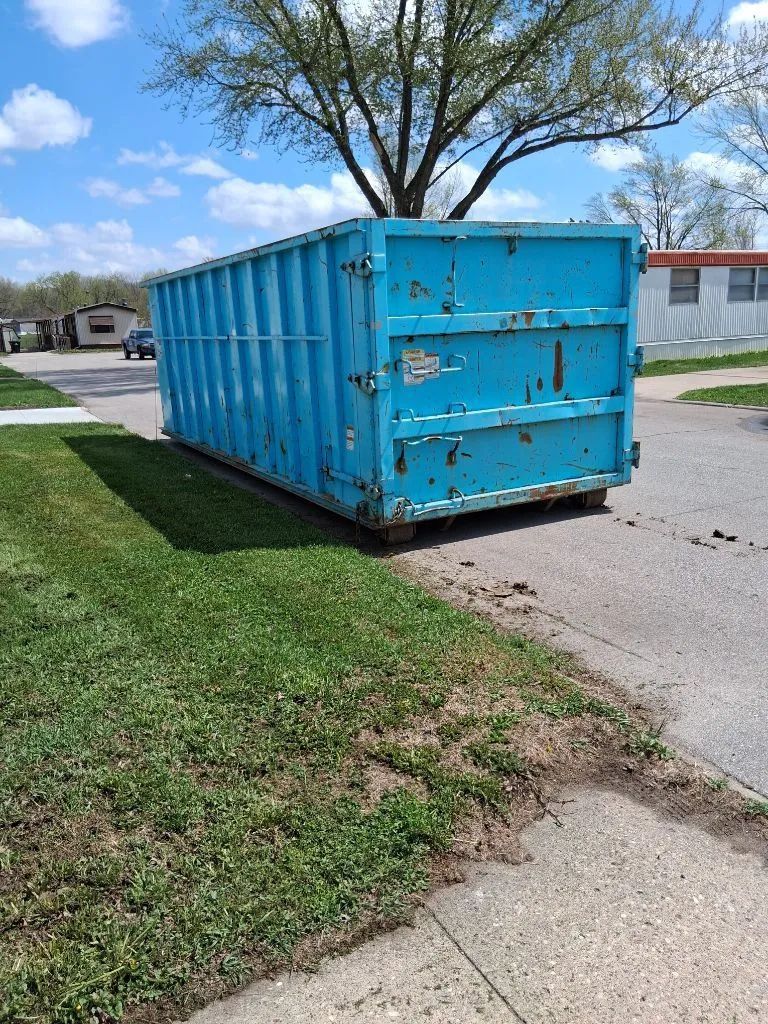
The company also provides roll off dumpsters, which lets one contractor handle both the demolition and the hauling. That removes a common gap in the schedule, where a demolition crew waits for a container from a separate vendor. Sizing, placement, and swap timing are planned against the demolition sequence so that the dumpster is at the door when the material starts to come out, not a day later. On a site with limited space, placement is a real constraint, and it is worth walking the site for it before demolition begins.
Challenge Six: Tight Schedules and Trade Coordination
Demolition is usually the first activity on a critical path that has other trades waiting behind it. A slab removal that finishes two days late pushes the underground plumber, the concrete crew, and the inspections that follow.
Plan Backward From The Handoff
The useful question is not how long demolition takes but what the next trade needs and when. Mechanical contractors may need open ceilings first. Framers may need clean slabs. Electricians may need walls removed in a particular order. A demolition plan that follows the rebuild sequence, rather than its own convenience, keeps each trade moving.
Bring Demolition Into The Conversation Early
The best outcomes come when the demolition contractor sits in the preconstruction meetings. Blue Sky's service page lists coordinating with the general contractor and the trades, and planning around the schedule, among its demolition responsibilities. Early input catches issues such as access restrictions, shared utilities, or staging limits before they turn into lost days.
Build In A Cleanup Step
A site that is demolished but not cleaned is not ready for the next crew. Construction cleanup, which clears debris, sweeps, and removes dust, sits between demolition and the trades that follow. Planning it into the timeline, rather than squeezing it in, keeps the handoff clean.
Challenge Seven: Weather and Iowa Seasons
Weather affects demolition in ways that are easy to underestimate. Iowa winters bring frozen ground, ice on access roads, and short daylight. Spring rain turns staging areas to mud and can delay work that depends on dry haul routes. Summer heat affects crew pacing, and high winds change how dust and light debris behave on exterior jobs.
Planning For It
Dust suppression matters more on dry, windy days. Concrete removal and site clearing are usually easier to schedule when the ground is firm. Interior work, by contrast, is less affected by weather and can be used to keep a project moving when the exterior is not cooperating. A flexible sequence that moves between interior and exterior tasks limits the damage a weather day does to the schedule.
Challenge Eight: Structural Surprises
Even with a good assessment, a building occasionally behaves differently than expected once work starts. A beam carries more load than the drawings suggest. A wall that looked non structural turns out to be tied into the roof system. Previous renovations may have altered the load path in ways that are not documented.
Shoring And Sequence
When a structural question appears, the right response is to stop, shore, and confirm before continuing. That can mean temporary supports, revised cutting sequences, or input from the structural engineer of record. Crews that are trained to pause and ask tend to avoid the incidents that come from pushing through uncertainty.
Why Experience Matters
Blue Sky has operated in the Des Moines area since 2002, working on schools, banks, clinics, and apartments. That kind of range gives a crew a feel for how different building types behave, which helps most when a structure does something unexpected.
Frequently Asked Questions
What is the most common cause of delays on a commercial demolition project?
Unknown conditions are the usual culprit, especially undocumented utilities and suspected hazardous materials in older buildings. Both can stop work until they are identified and handled. An early site walk, a hazardous materials survey, and a utility verification step catch most of them before the crew mobilizes.
Do older buildings always contain asbestos?
No. Many buildings from the era when asbestos was widely used contain none in the areas being demolished, but it is common enough that testing suspect materials before work begins is standard practice. A survey by a qualified inspector is the only reliable way to know what is present and where.
Can demolition happen while a building is still occupied?
Often yes, with planning. Dust barriers, phased work zones, protected debris routes, and after hours scheduling allow interior demolition to proceed next to tenants who stay open. The feasibility depends on the scope, the building layout, and how sensitive the occupants are to noise and vibration.
How is demolition debris sorted and what happens to it?
Crews separate materials such as metal, clean concrete, wood, and general waste as the work proceeds. Recyclable streams go to facilities that accept them, salvageable items may be set aside for reuse, and the remainder goes to disposal. Sorting on site usually keeps loads cleaner and easier to place.
How does demolition fit into a construction schedule?
It is typically the first activity on the critical path, so the plan works best when it is built backward from what the next trade needs. Early coordination with the general contractor, a clear sequence, and a cleanup step before handoff keep the following trades from waiting.
What should I tell a demolition contractor before they bid?
Share the building age, available drawings, past renovations, known hazards, utility locations, site access limits, tenant occupancy, and the schedule for the next phase. The more a contractor knows about the site and the handoff, the more accurately the plan reflects the work.
Why Early Planning Keeps Demolition Projects on Track
Demolition rarely goes wrong because of the machines. It goes wrong because of what nobody knew was inside the building. Undocumented utilities, hidden hazardous materials, shared walls, tight schedules, and Iowa weather show up on commercial jobs, and each one costs less when it is found early. Blue Sky Cleaning and Demolition Services has worked in Des Moines, Iowa for 20 years, and the pattern holds across schools, banks, and clinics: the smooth projects are usually the ones planned carefully.
What separates a routine demolition from a stressful one is rarely luck. It comes down to verified utilities, a hazardous materials survey before work starts, protected boundaries, sorted debris, and a sequence built around what the next trade needs. When those pieces are in place, the surprises that appear become manageable adjustments instead of costly stoppages. The building gets cleared safely, the handoff stays clean, and the rebuild begins on time, which is what every owner, contractor, and tenant wants.